






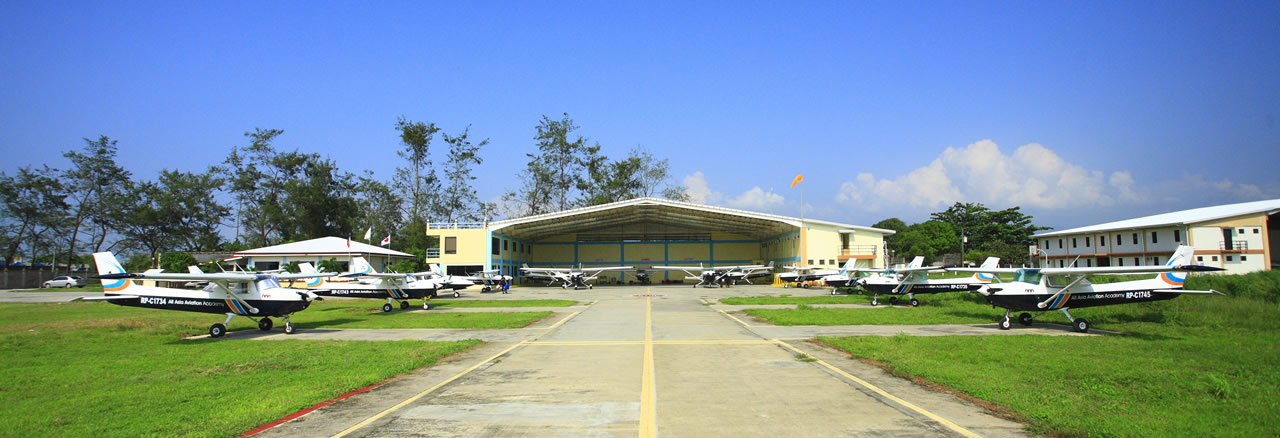
Aircraft Fleet & Simulators
At All Asia Aviation Academy (AAA), aircraft and flight simulation resources are integrated into a structured training system that supports students from the foundational stages of flight training through more advanced operations.
Each aircraft and simulator has a specific role within the training process, allowing students to develop the appropriate skills, knowledge, and operational experience as they progress.
As a flight school in the Philippines operating under Japanese-style management principles, AAA coordinates aircraft operations, instructor scheduling, daily flight activities, simulator training, and aircraft maintenance within an organized training environment.
This approach is designed to support training continuity, safety, and progressive skill development as students prepare for more advanced stages of pilot training and professional aviation.
How Aircraft and Simulators Support Pilot Training at AAA
Different aircraft, together with AAA’s flight simulator, support different stages of pilot development.
Single-engine aircraft are used to build core flying skills and progressively introduce navigation, cross-country operations, instrument procedures, and more advanced cockpit systems.
As students progress, multi-engine aircraft are introduced to develop skills in more complex aircraft operations, including multi-engine coordination, engine management, asymmetric flight, and engine-out procedures.
AAA’s flight simulator complements actual aircraft training by providing a controlled environment where students can repeatedly practice instrument procedures, cockpit familiarization, emergency scenarios, and other operational situations.
By combining these training platforms within a step-by-step progression, AAA helps students gain the appropriate experience at each stage while maintaining continuity throughout their training.
Training Platform Summary
| Training Platform | Role in AAA Training |
|---|---|
| Cessna 152 | Foundational flight training |
| Cessna 172P | Primary and progressive single-engine flight training, including navigation and instrument procedures |
| Cessna 172R | Primary and progressive single-engine flight training, including first solo flight experience |
| Cessna 172S | Navigation, instrument, advanced single-engine, and night flight training |
| TECNAM P2006T | Multi-Engine Rating (MER) and advanced multi-engine operations |
| Redbird MCX | Instrument procedures, emergency scenarios, cockpit familiarization, and scenario-based simulation training |
Aircraft Training Fleet
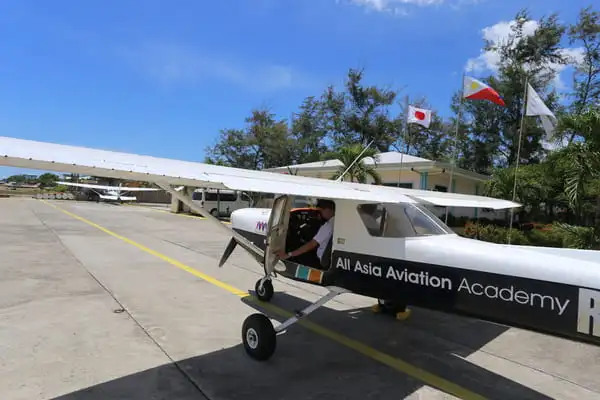
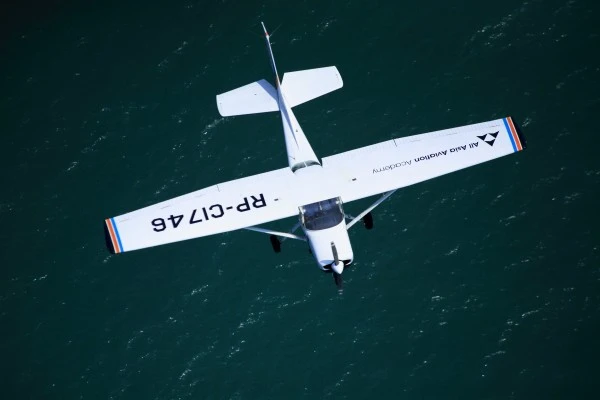
Cessna 152
Overview
The Cessna 152 is a two-seat, single-engine aircraft widely recognized as a primary training platform. Its relatively simple cockpit layout, stable handling characteristics, and established use in flight training make it well suited to students developing their fundamental flying skills.
Role in AAA Training
At AAA, the Cessna 152 may be used during the early stages of pilot training to help students develop essential skills including aircraft control, takeoff and landing procedures, basic flight maneuvers, coordination, and situational awareness.
Training in the Cessna 152 provides students with a foundation that supports progression to larger and more advanced aircraft later in the program.
Depending on the training stage and aircraft assignment, students may also begin their training on Cessna 172 aircraft, which now serve as AAA’s primary single-engine training platforms throughout much of the program.
Key Specifications
| Specification | Details |
|---|---|
| Engine | Avco Lycoming O-235-L2C |
| Horsepower | 110 BHP at 2550 RPM |
| Seating Capacity | 2 |
| Maximum Takeoff Weight | 1,670 lbs |
| Fuel Capacity | 26 gallons total |
| Stall Speed (flaps down) | 35 knots |
| Range | Approx. 320–690 NM |
| Service Ceiling | 14,700 ft |
| Rate of Climb | 715 ft/min |
Cessna 172P
Overview
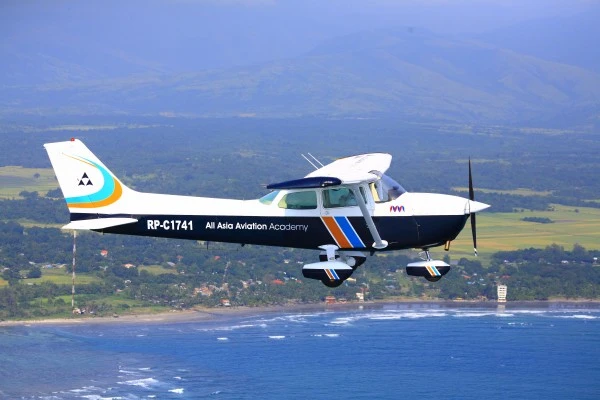
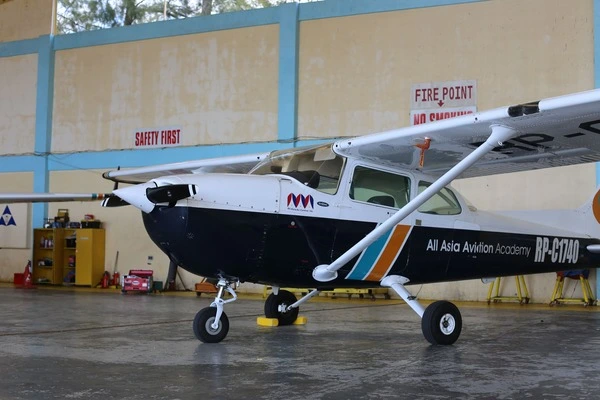
The Cessna 172P Skyhawk is part of the widely used Cessna 172 family of single-engine aircraft and is known for its stable handling and suitability for flight training.
AAA’s Cessna 172P is equipped with a Garmin G500 glass cockpit system, giving students exposure to modern electronic flight instrumentation while continuing their training on a familiar single-engine platform.
Role in AAA Training
At AAA, the Cessna 172P is used for more progressive stages of training, including cross-country navigation, instrument procedures, and advanced single-engine flight operations.
Exposure to modern avionics helps students become familiar with electronic cockpit information and develop the procedural skills required as they progress toward more advanced training environments.
Key Specifications
| Specification | Details |
|---|---|
| Engine | Lycoming O-320 |
| Horsepower | 160 HP |
| Seating Capacity | 4 |
| Maximum Takeoff Weight | 2,400 lbs |
| Fuel Capacity | 43 gallons total |
| Stall Speed (flaps down) | 33 knots |
| Range | Approx. 440–875 NM |
| Service Ceiling | 13,000 ft |
| Rate of Climb | 700 ft/min |
Cessna 172R
Overview
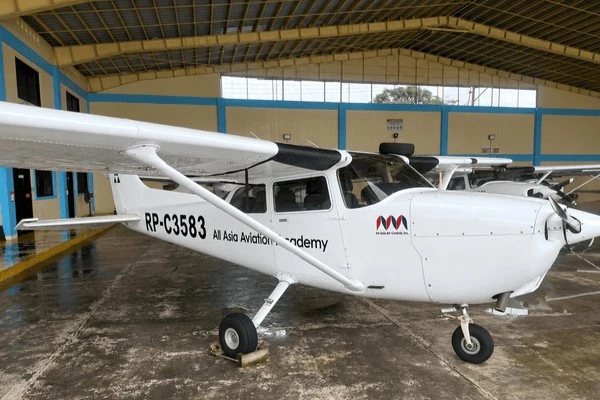
The Cessna 172R Skyhawk is a four-seat single-engine aircraft used in flight training for its stable handling, predictable flight characteristics, and suitability for progressive student development.
AAA’s Cessna 172P is equipped with a Garmin G500 glass cockpit system, giving students exposure to modern electronic flight instrumentation while continuing their training on a familiar single-engine platform.
Role in AAA Training
At AAA, the Cessna 172R supports students as they continue developing aircraft control, navigation, decision-making, and independent flying skills.
For many AAA students, the C172R is also the aircraft in which they complete one of the most important milestones in pilot training: their first solo flight.
A first solo represents the stage at which a student operates the aircraft without an instructor onboard, applying the skills and judgment developed during earlier dual-flight training.
Key Specifications
| Specification | Details |
|---|---|
| Engine | Lycoming IO-320-L2A |
| Horsepower | 160 HP at 2400 RPM |
| Seating Capacity | 4 |
| Maximum Takeoff Weight | 2,450 lbs |
| Fuel Capacity | 56 gallons total |
| Stall Speed (flaps down) | 33 knots |
| Range | Approx. 580–687 NM |
| Service Ceiling | 13,000 ft |
| Rate of Climb | 720 ft/min |
Cessna 172S
Overview
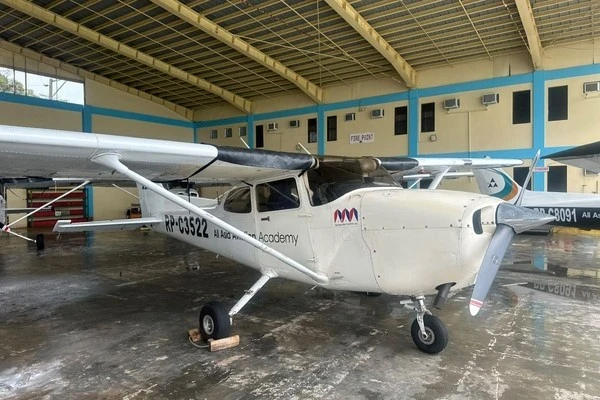
The Cessna 172S Skyhawk combines the established flight characteristics of the Cessna 172 platform with the Garmin G1000 glass cockpit system.
Its electronic flight displays and integrated avionics provide students with experience using modern cockpit systems while continuing to develop navigation, instrument, and operational flying skills.
Role in AAA Training
At AAA, the Cessna 172S is used for navigation, cross-country, instrument, and other advanced stages of single-engine training.
The aircraft is also used for actual Night Flight Training sorties at AAA, allowing students to gain practical experience operating an aircraft in night conditions.
Night flight training is one of the more advanced training capabilities available at AAA and requires the appropriate aircraft, operational procedures, training environment, and qualified instructional personnel to conduct safely and effectively.
This capability allows AAA students to gain experience beyond daytime flight operations and further develop the situational awareness, procedural discipline, and cockpit management required during night operations.
Key Specifications
| Specification | Details |
|---|---|
| Engine | Lycoming IO-320-L2A |
| Horsepower | 180 HP at 2800 RPM |
| Seating Capacity | 4 |
| Maximum Takeoff Weight | 2,550 lbs |
| Fuel Capacity | 56 gallons total |
| Stall Speed (flaps down) | 40 knots |
| Range | Approx. 518–638 NM |
| Service Ceiling | 14,000 ft |
| Rate of Climb | 730 ft/min |
TECNAM P2006T
Overview
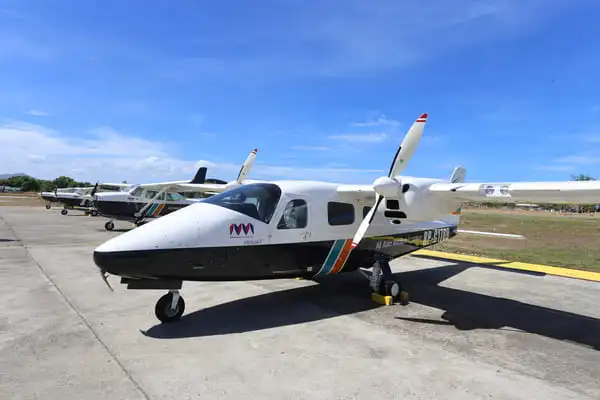
The TECNAM P2006T is a twin-engine aircraft designed for multi-engine operations and advanced pilot training.
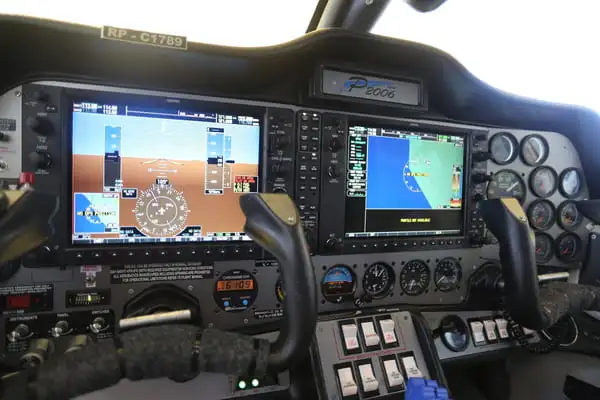
Its twin-engine configuration, retractable landing gear, and modern avionics allow students to transition from single-engine flying into a more complex operational environment.
Role in AAA Training
At AAA, the TECNAM P2006T is used primarily for Multi-Engine Rating (MER) training.
Students use the aircraft to develop skills including multi-engine coordination, engine management, asymmetric flight, engine-out procedures, system management, and decision-making in multi-engine operations.
This stage of training helps students apply skills developed during single-engine training while learning to manage the additional systems, procedures, and operational considerations associated with multi-engine aircraft.
Key Specifications
| Specification | Details |
|---|---|
| Aircraft Type | Multi-Engine Trainer |
| Engine | 2 × Rotax 912S3 (Piston, 100 hp each) |
| Seating Capacity | 4 |
| Avionics | Glass Cockpit (Garmin G950) |
| Cruise Speed | ~145 knots |
| Range | ~600 nautical miles |
| Landing Gear | Retractable |
| Primary Use | Multi-Engine Rating (MER) |
| Training Focus | Engine-out procedures, multi-engine coordination, system management |
Flight Simulation Training
Redbird MCX
Overview
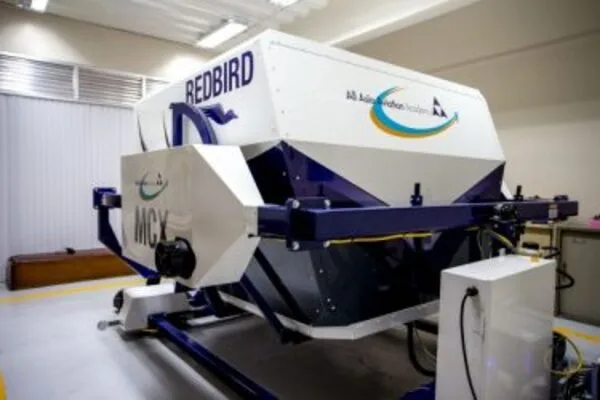
AAA operates the Redbird MCX, a full-motion flight simulator approved by the Civil Aviation Authority of the Philippines (CAAP).
AAA was the first Approved Training Organization (ATO) in the Philippines to use the Redbird MCX for pilot training and remains one of its longest-standing operators in the country.
The simulator has remained part of AAA’s training environment over the years and is continuously maintained and updated with support from the manufacturer.
Role in AAA Training
The Redbird MCX is integrated into AAA’s pilot training to support instrument procedures, emergency scenarios, cockpit familiarization, scenario-based exercises, and skill reinforcement.
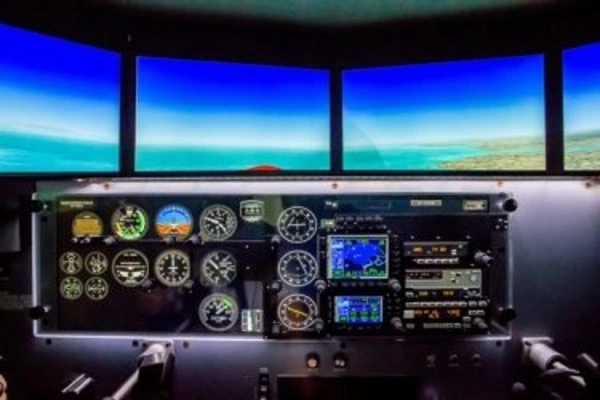
Its customized, interchangeable panels can be configured to reflect the cockpit environments used in AAA’s Cessna 172 aircraft, Garmin G1000-equipped aircraft, and TECNAM P2006T, helping reduce the transition gap between simulator sessions and actual flight training.
A simulator allows students to practice procedures repeatedly within a controlled environment, including situations that may be difficult, inefficient, or inappropriate to reproduce repeatedly during normal aircraft operations.
By combining simulator sessions with actual flight training, students can reinforce procedural understanding and cockpit decision-making before applying those skills in the aircraft.
Key Specifications
| Specification | Details |
|---|---|
| Device Type | Full-Motion Flight Simulator |
| Model | Redbird MCX |
| Certification | CAAP Approved (FSTD) |
| Configuration | Configurable Cockpit (Cessna / Tecnam profiles) |
| Visual System | Wraparound Display (approx. 200° field of view) |
| Motion System | 3-axis Electric Motion Platform |
| Primary Use | Instrument & Scenario Training |
| Training Focus | Emergency procedures, IFR training, scenario-based learning |
Aircraft Maintenance & Safety
Aircraft safety, reliability, and airworthiness are supported by the All Asia Aviation Maintenance Organization, AAA’s dedicated Aircraft Maintenance Organization (AMO), certified by the Civil Aviation Authority of the Philippines (CAAP).
Having maintenance managed within the organization allows closer coordination between flight operations and aircraft maintenance, together with direct oversight of the condition and readiness of the training fleet.
Maintenance responsibilities include:
- Regular aircraft inspections
- Scheduled maintenance in accordance with applicable regulatory requirements
- Maintenance work performed by qualified personnel
- Monitoring of aircraft condition and airworthiness
- Coordination between maintenance requirements and daily flight operations
This system supports the continued availability and safe operation of aircraft used throughout AAA’s training programs.
Supporting Training Continuity Through Coordinated Operations
Flight training depends not only on the availability of aircraft, but also on the coordination of instructors, maintenance requirements, weather conditions, flight schedules, and daily operations.
AAA organizes these operational elements together to help students maintain a steady training rhythm and reduce avoidable interruptions where possible.
Aircraft availability, instructor scheduling, maintenance planning, and daily flight activities are coordinated as part of the overall training operation.
Maintaining this coordination helps students preserve continuity between training sessions, reinforce previously developed skills, and progress through each stage of training more consistently.
Training efficiency at AAA therefore comes not only from the aircraft themselves, but also from the operational system used to support their effective use.
Integrating Actual and Simulated Flight Training for Effective Learning
Effective pilot training is not defined by a single aircraft, simulator, or lesson.
It depends on how different training elements work together throughout a student’s progression.
At AAA, single-engine aircraft, multi-engine aircraft, simulation training, maintenance support, instructors, and daily flight operations are integrated within the same training environment.
Actual aircraft training provides students with real-world flight experience, while simulator training allows procedures and scenarios to be practiced repeatedly under controlled conditions.
Together, these resources support progressive learning—from fundamental aircraft control through navigation, instrument operations, multi-engine training, night operations, and more advanced stages of pilot development.
The objective is not simply to give students experience flying different aircraft, but to help them understand how the knowledge, procedures, systems, and decision-making skills developed at each stage connect to the next.
Explore More About Training at AAA
Aircraft and simulator training form only one part of the overall training environment at All Asia Aviation Academy.
Learn more about AAA’s training programs, facilities, student environment, and support systems:
Explore Pilot Training Programs
Learn about the different pilot licenses and training pathways available at AAA.
Explore the AAA Training Campus
Learn more about the environment where students complete their flight training.
Explore Student Life & Safety
Learn about student accommodation, daily life, safety, and support during training in the Philippines.

FAQ
What aircraft does AAA use for pilot training?
AAA uses several aircraft types for different stages of pilot training, including the Cessna 152, Cessna 172P, Cessna 172R, Cessna 172S, and TECNAM P2006T. These aircraft support training ranging from basic single-engine flight skills to navigation, instrument, night, and multi-engine operations.
Which aircraft is used for first solo flights at AAA?
For many AAA students, the Cessna 172R is used for their first solo flight. The first solo is an important training milestone in which the student operates the aircraft without an instructor onboard after demonstrating the required skills and readiness.
Does AAA use glass cockpit aircraft for pilot training?
Yes. AAA operates aircraft equipped with modern glass cockpit avionics, including the Garmin G500, Garmin G1000, and Garmin G950 systems across selected aircraft in the training fleet.
These aircraft allow students to gain experience with electronic flight displays and modern avionics during appropriate stages of training.
Does AAA provide multi-engine flight training?
Yes. AAA uses the TECNAM P2006T for Multi-Engine Rating training.
Students learn multi-engine coordination, engine management, asymmetric flight, engine-out procedures, and other skills required for operating twin-engine aircraft.
Does AAA provide night flight training?
Yes. AAA conducts actual night flight training using the Cessna 172S.
Night training gives students practical experience operating an aircraft under night conditions and helps develop additional situational awareness, procedural discipline, and cockpit management skills.
What is the Redbird MCX used for at AAA?
The Redbird MCX is used to support instrument procedures, emergency scenario training, cockpit familiarization, IFR training, and scenario-based exercises.
AAA integrates simulator training with actual aircraft training so students can repeatedly practice important procedures within a controlled environment.
How are AAA's training aircraft maintained?
AAA’s aircraft are supported by the All Asia Aviation Maintenance Organization, AAA’s CAAP-certified Aircraft Maintenance Organization.
Maintenance activities include scheduled inspections, regulatory maintenance requirements, aircraft condition monitoring, and coordination with daily flight operations.